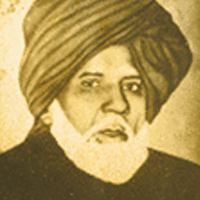
FANA BULANDSHAHRI
Beloved Sufi poet of Urdu, best known for the immortal couplet "Mere Rashk-e-Qamar" — verses of love and devotion that still move listeners across generations.
Born Muhammad Hanif in Bulandshahr, in the Indian state of Uttar Pradesh, the poet adopted the pen name Fana — a word that carries the Sufi idea of self-dissolution, of losing the self in something greater. It was a fitting choice, for devotion would become the heart of his verse. He came up under the guidance of the celebrated ustad Qamar Jalalvi, and in that classical school he learned the discipline and polish that mark his ghazals. A Voice of Love and Devotion Fana wrote with lyrical grace and deep emotional feeling. Love, longing, and separation run through his ghazals, yet his work carries a distinctly spiritual current as well — the longing of the lover and the longing of the devotee often become one and the same in his lines. His verse found a natural home in the mushaira, where its clarity and music won him admirers, and his standing as a Sufi poet was deepened by his own spiritual attachments and the devotional poetry he composed in their honour. The Couplet That Made Him Immortal For many listeners, Fana's name is inseparable from a single, unforgettable composition — "Mere Rashk-e-Qamar." When the legendary Nusrat Fateh Ali Khan set it to music, the verses reached audiences far beyond the world of the printed page, and in later years Rahat Fateh Ali Khan carried the same couplet to new generations in concert after concert. Few poets are remembered for words that travel so far on the wings of a melody. Through that one immortal piece, and the body of tender, devotional poetry around it, Fana Bulandshahri holds a cherished place in the living tradition of Urdu verse.